
The short answer: an in-office fluoride treatment is a concentrated varnish, gel or foam that a dental professional applies to your teeth to strengthen enamel and help stop early decay. It is most useful for children and for adults at higher cavity risk, such as those with dry mouth, exposed roots, braces or frequent cavities, and it uses a small, measured amount.
Fluoride treatments are part of the preventive care at Lake Magdalene Dental, the Lake Magdalene practice on N Florida Ave led by Dr. Mateen Sheikh, alongside exams, digital X-rays, cleanings and sealants. This guide explains what the treatments do, who benefits, how safe they are, and what changed with fluoride in Florida and at the federal level in 2025. It reflects official sources as of November 2026.
Every time you eat or drink sugars and starches, bacteria on your teeth produce acid that pulls minerals out of the enamel. Minerals in saliva, plus fluoride, help put them back. When the losses keep outpacing the repairs, a chalky white spot can appear. That is the earliest sign of decay, and at that stage it can still be stopped or reversed. Once a hole forms, it needs a filling (NIDCR: the tooth decay process).
Fluoride tips the balance toward repair. According to the CDC, it replaces lost minerals, makes the outer enamel harder for acid to dissolve, and may reduce how much acid cavity-causing bacteria produce (CDC: About Fluoride). Toothpaste delivers a low dose every day; a professional treatment delivers a much higher concentration less often, for people whose risk calls for it.
Which form you get depends on your age, your risk and your dentist’s judgment. After a treatment, your dental team will tell you how long to wait before eating, drinking or brushing; the timing varies by product, so follow the instructions you are given.
Four ways fluoride reaches your teeth
Who each one is for, and how it is used.
Fluoride toothpaste
Everyone with teeth
Twice a day. A rice-grain smear under age 3; a pea-sized amount from 3 to 6.
In-office varnish, gel or foam
Children and higher-risk adults
Applied by the dental team, on an interval set by your cavity risk.
Prescription toothpaste or gel
Higher-risk patients
Stronger than store-bought. Used at home exactly as your dentist prescribes.
Swallowed supplements
Now limited
The FDA recommends them only for children aged 3 and older at high risk of decay.
Since July 1, 2025, Florida law is widely understood to end added fluoride in public water. Ask your water provider about natural levels.
Children and adults both benefit from fluoride, but an in-office treatment makes the most sense when your cavity risk is higher, which your dentist judges from your history, exam and X-rays. It most often comes up for:
Fluoride dental products are regulated as drugs by the U.S. Food and Drug Administration, and the CDC describes them as safe and effective when used as directed. A professional treatment uses a small, measured amount applied to the teeth; it is not meant to be swallowed, and the excess is removed.
The side effect people ask about most is dental fluorosis: faint white flecks or lines on the enamel. According to the CDC, it can only develop while teeth are still forming under the gums, up to about age 8, so older children, teens and adults cannot get it. In the U.S. it is mostly mild and cosmetic; moderate and severe forms are rare (CDC: About Dental Fluorosis). Young children can take in too much by swallowing toothpaste or other fluoride products over time, which is why amounts matter.
Swallowed fluoride supplements are a separate question. In 2025 the FDA reviewed the prescription fluoride products children swallow, typically tablets and drops, and on October 31, 2025 recommended that they not be used in children under 3 and be limited to children aged 3 and older at high risk of tooth decay (FDA: Ingestible Fluoride Drug Products). That action covered swallowed prescription products only. In its letter to clinicians, the FDA described topical application as an effective way to deliver fluoride and recommended daily brushing with an appropriate amount of fluoride toothpaste. Do not start any fluoride supplement without talking to your child’s dentist or doctor.
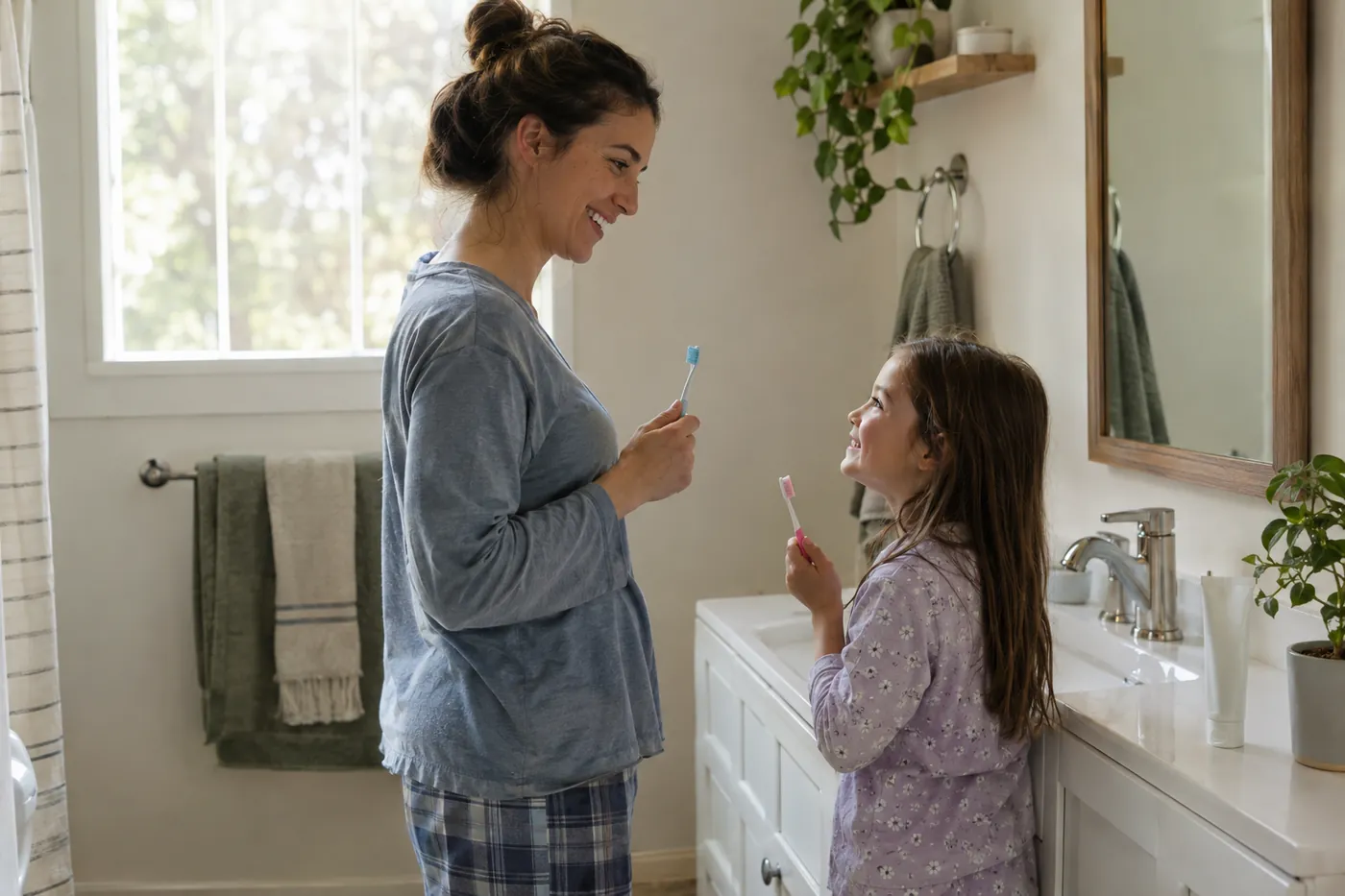
The CDC, ADA and NIDCR all recommend brushing twice daily with fluoride toothpaste. For children, the amount matters most:
Fluoride mouth rinse can add protection for some people, but the ADA advises against mouthwash for children under 6 unless a dentist recommends it, because they are more likely to swallow it. If your risk is high, your dentist may prescribe a stronger toothpaste, gel or rinse for home use; use it exactly as directed and keep it out of young children’s reach.
Fluoride, sealants and cleanings do different jobs, and they work together:
Daily habits still carry the most weight: fewer sugary snacks and drinks between meals, cleaning between teeth, and regular check-ups.
Here is what official sources say about recent changes.
None of this is a reason for alarm. But if your household drinks public water in Florida, one everyday source of low-level fluoride has changed, which is a reasonable thing to raise at your next check-up, especially for children and anyone at higher risk. Your water provider can tell you the current fluoride level in your tap water; private wells need a lab test. The FDA’s supplement action did not restrict fluoride toothpaste or fluoride applied at the dental office.
How long does a fluoride treatment take?
Not long. Varnish is brushed on in a quick step, often at the end of a check-up; gel or foam usually stays in a tray for 1 to 4 minutes.
Do adults need fluoride treatments?
Not every adult. In-office fluoride is most useful for adults with frequent cavities, dry mouth, exposed roots or braces. If your risk is low and you brush twice daily with fluoride toothpaste, your dentist may not recommend it.
Is fluoride varnish safe for young children?
Varnish uses a small amount of fluoride, is applied by trained professionals, and is used in dental and pediatric offices to help prevent early cavities. Fluorosis risk in young children comes from swallowing too much fluoride over time from any source, so keep toothpaste amounts small and supervise brushing.
Does Florida still add fluoride to tap water?
Since July 1, 2025, Florida law has prohibited public water systems from using additives that do not meet its definition of a water quality additive, which is widely understood to end added fluoride. Naturally occurring fluoride can remain; your water provider can tell you the current level.
Can my child still get fluoride supplements?
The FDA now recommends that swallowed fluoride products, typically tablets and drops, not be used in children under 3 and be limited to children aged 3 and older at high risk of tooth decay. Ask your child’s dentist or pediatrician whether your child qualifies.
How often should I get a fluoride treatment?
It depends on your risk. Varnish has to be reapplied at regular intervals to keep working, so your dentist will set a schedule, often matched to your check-ups.
Is fluoride toothpaste enough on its own?
For many lower-risk people, it may be. The CDC notes that people who drink fluoridated water and brush daily with fluoride toothpaste may not need higher-strength fluoride. Since Florida’s 2025 water law is widely understood to end added fluoride in public water, ask your dentist where you stand.
If a child swallows a lot of fluoride
If a child swallows a large amount of fluoride toothpaste, rinse or gel, call the national Poison Help line at 1-800-222-1222, which is free and open 24 hours, or call 911 if the child has trouble breathing, is hard to wake or has a seizure. Do not make the child vomit unless poison control tells you to, and keep the product container with you. MedlinePlus explains more about toothpaste overdose.
Want to talk about fluoride for you or your children? Book online or call (813) 397-8442. We are at 15511 N Florida Ave #105, serving Lake Magdalene and nearby neighborhoods.
Open Monday – Saturday: 9:00 AM – 5:00 PM
Sunday: Closed
Walk-in Days:
Monday, Wednesday & Friday 9:00 AM – 5:00 PM
Tuesday, Thursday & Saturday by appointment